
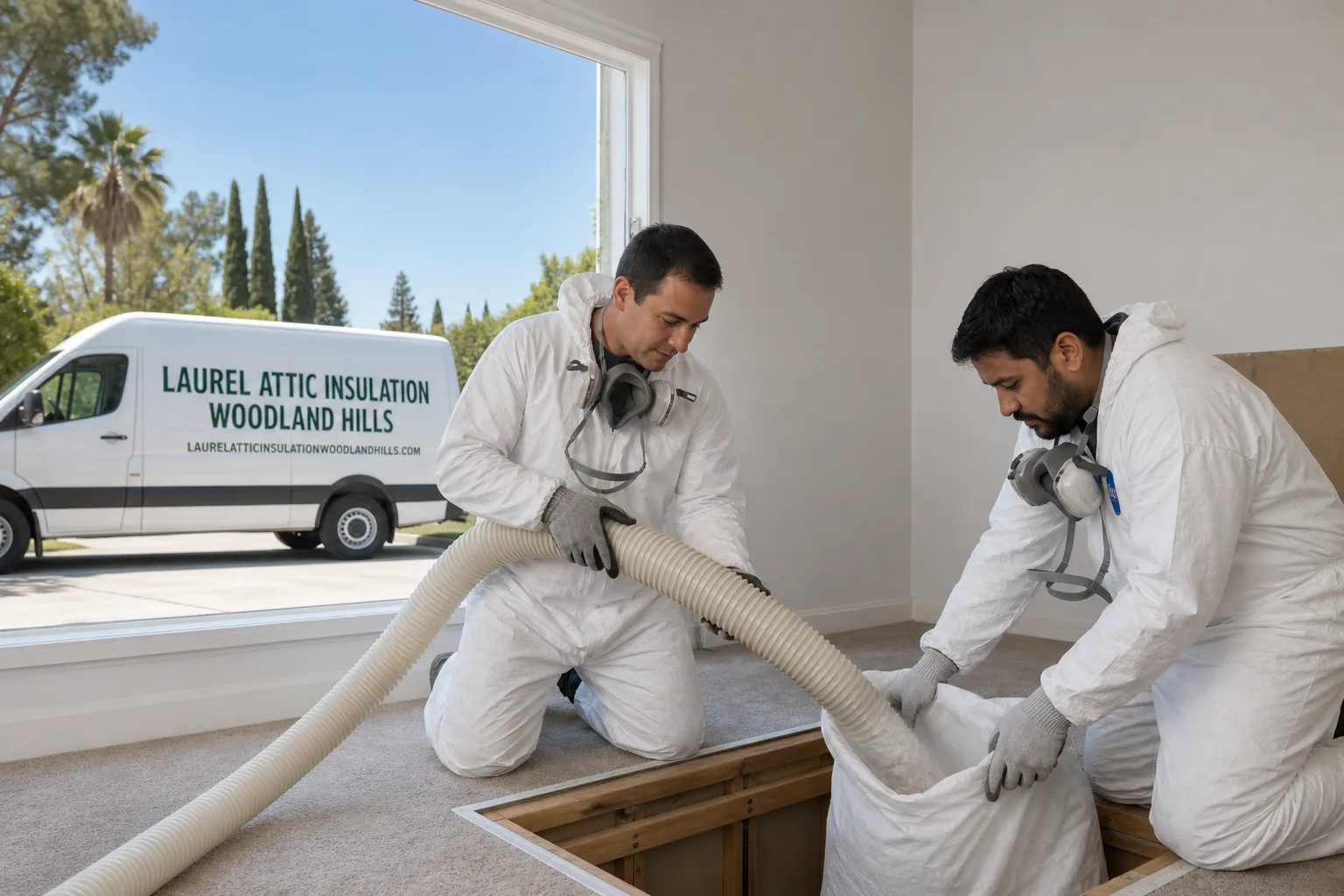
Fast, Reliable Insulation Removal Across West Hills
Old, failed, or contaminated attic insulation doesn’t just make your West Hills home uncomfortable. It drags down your HVAC efficiency, traps allergens, and can hide moisture problems that quietly damage roof sheathing. Our Insulation Removal team pulls out the old material, seals the thermal gaps that West Hills homes are known for, and preps the space for fresh insulation that actually performs. If you’re in West Hills and your attic still has the original 1960s or 1970s fiberglass batts, call (559) 295-5362 for a free removal estimate. We dispatch crews to West Hills daily, and we bring the right equipment for tight attic access and vaulted ceilings.
Most removal jobs in West Hills are completed in one day. We show up at a live, trackable time, not a four-hour window. Before anything starts, you get a written price. After the job, you get photo proof of what was removed and what went back in. That’s the standard, and it’s in writing.
Why Laurel Attic Insulation Woodland Hills Is West Hills’s Preferred Insulation Removal Company
West Hills homeowners deal with a specific set of attic problems that contractors from flat, newer developments don’t always recognize. The housing stock here is dominated by large detached homes built in the 1960s and 1970s, many with original fiberglass batt insulation that’s now compressed, dusty, or water-stained. Add in the canyon-adjacent microclimates, and you get attics that behave very differently from one block to the next. We know the difference between a north-facing slope off Valley Circle Boulevard and a south-facing hillside above the 101, and we plan removal around it.
Chase Whitaker leads our crew. He’s spent years crawling through attics in West Hills, Woodland Hills, and the surrounding west Valley, and he’s seen the same failure patterns over and over: rodent nesting in old batts, moisture trapped against roof sheathing on shaded lots, and three-stud “California corners” that were never insulated. When you call us, you’re talking to someone who knows the specific quirks of your neighborhood, not a call center reading off a script.
We’re part of the Relay Home Co. family, which means every job runs on the Relay Visibility Guarantee: live arrival tracking, before-and-after photos, and a written price before a single bag of old insulation leaves your attic. Our 365-Day Done Right Promise covers the workmanship for a full year. If it’s not right, we make it right. Free second visit if the repair fails, no charge, no argument.
You can reach a live person at (559) 295-5362 any time, day or night. No voicemail queue, no callback tag.
Moldy Insulation in West Hills
Moldy Insulation in West Hills is a problem we see most often on the heavily tree-shaded, north-facing slopes that run through the neighborhoods below Bell Canyon and along the Upper Las Virgenes Canyon Open Space. Those lots stay cool and damp for more of the year than south-facing exposures, which means attic moisture that would dry out in a sunnier part of West Hills just sits there. Old fiberglass batts soak it up, and mold moves in. When that happens, removal needs to be complete and careful, because trapping mold spores under new insulation just moves the problem deeper into the house.
A full moldy insulation removal in West Hills typically runs $1,800 to $4,200 depending on attic size, access, and how far the contamination has spread. That includes containment, removal, surface treatment, and disposal. We don’t just yank the old batts and call it done. We check the sheathing, seal the soffit-to-attic transition, and make sure the moisture source is addressed before anything new goes in. Otherwise you’re paying for a repeat removal in two years.
Moisture Source First, Removal Second
On shaded West Hills lots, the mold comes from somewhere. Old bird-block vents, unsealed soffit gaps, or bathroom fans venting directly into the attic are the usual culprits. We find the source and fix it during the removal, because pulling moldy insulation without stopping the moisture is like bailing a boat without plugging the hole.
Safe Containment During Removal
We run negative-air containment when mold is present, so spores don’t drift into your living space. Technicians wear full PPE, and the old material goes out through sealed bags, not tossed down a ladder. If your family is home during the job, you won’t smell it, and you won’t breathe it.
Insulation Replacement in West Hills
Insulation Replacement in West Hills often means pulling out the original 1960s or 1970s fiberglass that’s been flattened, dust-contaminated, or water-damaged over the decades, then installing material that actually matches the job. Many of the sprawling ranch homes and two-story traditionals around Platt Village and the streets north of Victory Boulevard still have whatever the builder stapled in fifty years ago. It wasn’t great then, and it’s well past done now.
Replacement after removal in West Hills generally runs $2,200 to $5,500, depending on square footage, R-value target, and whether you’re doing blown-in fiberglass, blown-in cellulose, or spray foam. We source from Owens Corning, GreenFiber, Demilec, and other trusted manufacturers, and we match the material to your attic’s actual conditions, not to whatever’s already on the truck. A vaulted ceiling over the living room needs a different approach than a flat attic over the garage.
Reaching the California Corners
Here’s the thing about West Hills specifically: many of these homes were framed with three-stud corners, meaning there’s a hollow pocket behind the drywall at every outside corner. No insulation ever touched those spaces. When we do replacement, we flag those cavities with infrared and make sure the new material actually reaches them. That’s how you eliminate the ghostly cold lines on interior walls in winter.
Matching Material to Microclimate
A north-facing, tree-covered slope off Roscoe Boulevard needs different insulation than a south-facing exposure baking in the September sun. We factor that in before we recommend a replacement. Blown-in fiberglass like Knauf Jet Stream Ultra works well in some attics. In others, especially where vaulted ceilings limit access, dense-packed cellulose from GreenFiber is the smarter call. You get the recommendation in writing, with the price, before the job starts.
Trusted Brands We Service in West Hills
West Hills attics contain every brand and type of insulation imaginable, from 1960s rock wool to early-2000s fiberglass to failed DIY spray foam. We service and remove all of it. When it’s time to install, we pull from a material list built around what actually performs in this climate: Owens Corning for blown-in fiberglass, GreenFiber for dense-packed cellulose, and Demilec for closed-cell spray foam in tough-to-reach cathedral ceilings. We don’t stock one brand and force it into every job. You get the right material for your specific attic, and we keep common supplies staged for fast West Hills turnaround.
Common Insulation Removal Problems We See in West Hills Homes
- Rodent-nested fiberglass left under new insulation. Rats and mice love original 1960s batts in West Hills attics. When contractors blow new insulation over the old stuff without removing the nesting first, the odor comes back every time the Santa Anas blow through the unsealed soffit gaps. Full removal is the only way to actually reset the attic.
- California corners still uninsulated after replacement. The three-stud corners in West Hills homes create hollow spaces behind the drywall. We’ve re-done jobs where a previous crew pulled out old batts and blew in new material but never addressed those corner pockets, so the cold lines reappeared on freshly painted walls the next winter. Our infrared screening catches them before we finish.
- Soggy insulation on north-facing, tree-shaded slopes. Homes below Bell Canyon and along the Upper Las Virgenes Canyon corridor stay damp and cool more of the year. Removing that moisture-loaded insulation is critical before re-insulating. If it’s not removed, the trapped moisture corrodes roof sheathing and feeds mold behind the new material.
- Vaulted ceilings with little or no insulation above. Many West Hills ranch homes and two-story traditionals have vaulted living-room ceilings that were never insulated properly, if at all. Removal in those areas often means working through small access holes and carefully extracting failed material without damaging drywall. We’ve done it on hundreds of homes here, including a sprawling ranch off Valley Circle Boulevard where a Santa Ana windstorm drove rain through old bird-block vents and soaked the vaulted ceiling insulation. We removed the water-damaged fiberglass, sealed the soffit-to-attic transition, and blew in Knauf Jet Stream Ultra, which eliminated a 12-degree winter cold stripe the homeowner had been painting over for years.
Pricing for Insulation Removal in West Hills, CA
Here are the honest numbers for the West Hills market. A straightforward attic insulation removal in a typical 1,800 to 2,400 square foot home runs $1,200 to $2,800. If mold remediation is involved, expect $1,800 to $4,200 depending on how far the contamination has spread. Full removal plus replacement with blown-in fiberglass or cellulose lands between $2,200 and $5,500. Vaulted ceilings, tight attic access, and California corner sealing can push the high end up. You’ll get an exact written price before we start, every time. Estimates are free. Call (559) 295-5362 and we’ll schedule a walkthrough at a live, trackable time.
We Also Serve Cities Near West Hills
Our crews cover West Hills and the surrounding west Valley daily. You’ll find us in Canoga Park, Woodland Hills, Winnetka, and Calabasas most weeks, often with same-day scheduling available. If you’re just outside West Hills and dealing with old, failed, or moldy attic insulation, call (559) 295-5362. We’ll let you know if we can get a crew to you today.
Serving West Hills, CA - Our Local Coverage Area
We’re based in the West Hills area and know this community well. Use the map below to see our service coverage - if you’re nearby, we can almost certainly help.
FAQs About Insulation Removal in West Hills
Those cold lines are almost always California corners, the three-stud framing technique used in many West Hills homes built in the 1960s and 1970s. There’s a hollow pocket behind the drywall at every outside corner, and standard insulation jobs never reach it. We use infrared cameras during removal to locate those uninsulated corners and make sure the replacement material actually fills them. Call (559) 295-5362 to have your corners checked during a removal estimate. It’s free.
If the existing material is water-stained, rodent-nested, compressed to half its original thickness, or smells musty when the Santa Anas blow, full removal is the right call. Topping off over contaminated material traps the problem under the new insulation. In West Hills, where shaded north slopes and old bird-block vents create recurring moisture, we recommend removal far more often than topping off. A quick attic inspection will tell you for sure.
It gets fully removed under negative-air containment, bagged, and disposed of off-site. Then we fix the moisture source, which on shaded West Hills lots is usually unsealed soffit gaps or old vents that let damp air and Santa Ana-driven rain into the attic. Only after the moisture is addressed do we install new insulation. Skipping any part of that sequence just puts mold behind the new material. Call (559) 295-5362 for an inspection and written quote.
Often yes, especially if the original insulation has settled, compressed, or was never installed correctly over the vaulted ceilings. South-facing West Hills hillsides bake in the afternoon sun, which superheats the attic and radiates down into upstairs rooms. Removing the failed insulation, air-sealing the attic floor, and installing the right R-value for your exposure makes a measurable difference. We’ll show you the before-and-after thermal photos.
Yes, with proper containment and ventilation. September and October heat waves in West Hills push attic temperatures well over 120 degrees, which is dangerous for unprotected workers, so we schedule removal jobs in the early morning when possible and run containment that keeps dust and fibers out of your living space. Your family can stay home during the work. If you’d rather leave, we’ll send photo updates throughout the day so you can see exactly what’s happening.
Written by Chase Whitaker, Owner at Laurel Attic Insulation Woodland Hills, serving West Hills with precise, local insulation removal.