
Knauf Vapor Barrier Installation: The Woodland Hills Owner’s Guide
We stock and install Knauf-compatible vapor barrier systems in Woodland Hills, with most installations running $1,100 to $2,800 depending on attic square footage and the condition of your existing insulation. Same-day and next-day appointments are available, and we carry Knauf vapor retarder materials on our trucks so we’re not making you wait on a second trip. Most Woodland Hills homeowners discover a vapor barrier problem indirectly: a musty smell that won’t quit, peeling paint on ceilings, or an energy bill that crept up over two summers without an obvious cause. The vapor barrier is the quiet part of your attic assembly until it isn’t.
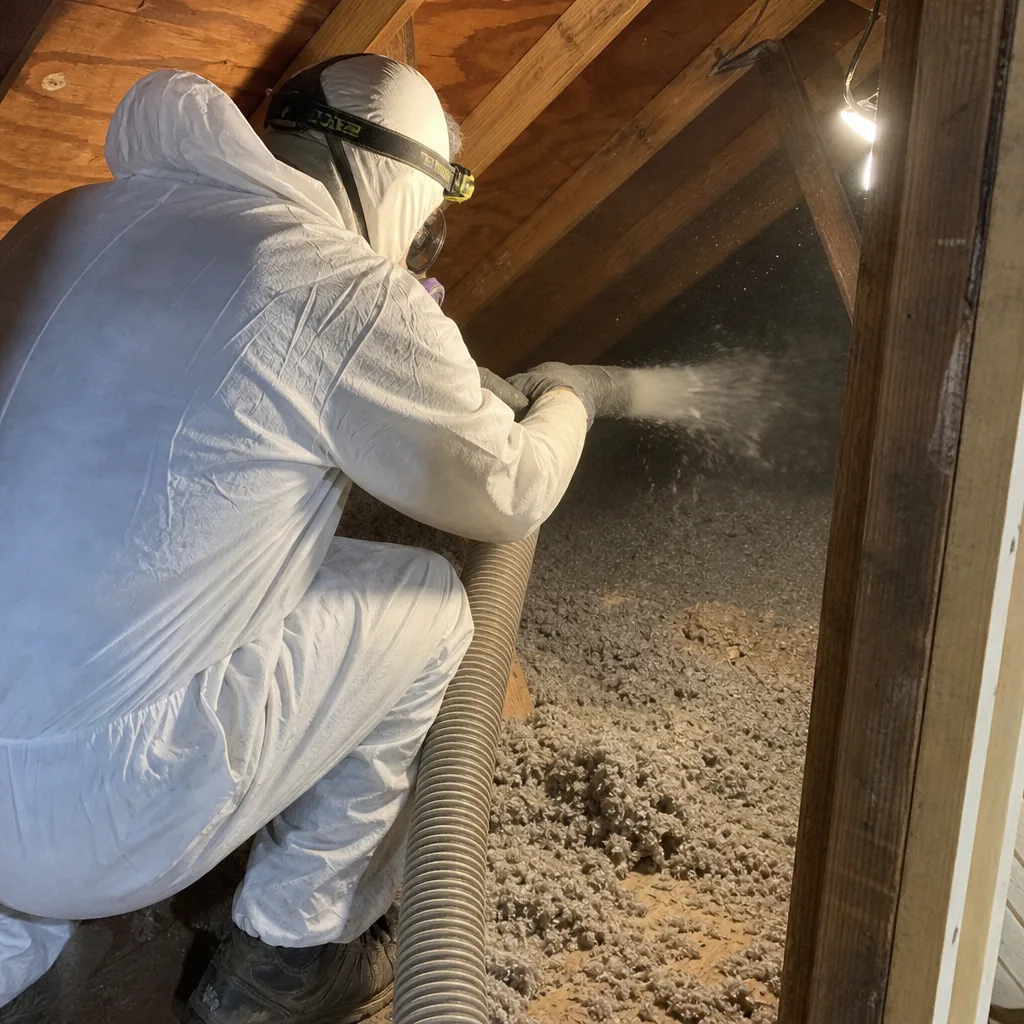
Key Takeaways:
- Knauf vapor barriers fail slowly, typically lasting 10 to 15 years in Southern California’s dry climate before seams open or staples pull through.
- OEM Knauf vapor retarder material runs $0.35 to $0.60 per square foot for the material alone; installed pricing includes removal of damaged sections, seam sealing, and verification.
- This is a low-voltage, low-tension job mechanically, but it does involve working in confined attic spaces where the real risk is heat and dust, not springs or electricity.
- We’re an independent installer, not affiliated with Knauf, which means we match the barrier to your existing insulation rather than pushing one product line.
Which Knauf Models This Applies To
The vapor barrier question in Woodland Hills almost always comes down to two Knauf product families: the Knauf Insulation EcoBatt line, which pairs with a separate vapor retarder facing, and the Knauf Jet Stream blow-in systems, where the vapor control layer is a standalone sheet installed between the drywall and the insulation. If your attic has faced batts, the facing itself acts as the vapor retarder, and the common failure point is the stapled flange pulling loose over time. If you have a standalone sheet, it’s typically a 6-mil or 10-mil poly film that gets punctured during other attic work, like cable runs or recessed light swaps.
Here’s the compatibility gotcha we see regularly in Woodland Hills: older homes built before 2000 often used 4-mil polyethylene, which is now below Knauf’s own minimum spec of 6-mil for residential ceiling applications. If your barrier is 4-mil, you’re not looking at a repair. You’re looking at replacement, because patching a sub-spec film just moves the failure point somewhere else. When we inspect, we check the corner of the sheet for a printed gauge marking; if there’s no marking, we measure with a micrometer. No guesswork.
For OEM versus aftermarket, the honest answer is that vapor barrier material is a commodity product. Knauf’s branded retarder film is well made, but a quality 6-mil or 10-mil poly from a manufacturer like Reflectix delivers the same perm rating at a lower material cost. The OEM decision matters more for insulation batts than for the barrier itself. We’ll quote both options and let the numbers speak.
Signs Your Knauf Vapor Barrier Installation Is Failing
- Condensation on attic ductwork or roof decking during winter mornings. In Woodland Hills, we get cool, damp nights from November through February. If moisture is collecting on the underside of your roof sheathing, your barrier is letting humid interior air migrate upward, and that moisture is condensing on the cold surface above.
- Water staining on ceilings below the attic, especially around light fixtures. Warm, moist air moves toward any penetration in the drywall. When the vapor barrier has a tear or a failed seam near a recessed light, that air reaches the ceiling and deposits moisture there. The stain is the last symptom; the leak happened weeks earlier.
- Insulation that feels damp or compressed in specific areas. Fiberglass loses R-value when wet, and Knauf EcoBatt is no exception. A damp patch means the barrier failed directly above that spot, not that your insulation is defective.
- Peeling or bubbling paint on bedroom or bathroom ceilings. This is the classic Woodland Hills signal, especially in homes where the bathroom fan vents into the attic instead of outside. That moist air hits a compromised barrier and condenses on the ceiling plane.
- A persistent musty smell that air fresheners don’t fix. Once moisture gets trapped between the barrier and the drywall, mold and mildew take hold. By the time you smell it, the barrier has been compromised for months.
Replacement Cost & What’s Included
Knauf vapor barrier installation in Woodland Hills typically runs $1,100 to $2,800. The spread is driven by three things: attic square footage, ceiling height and accessibility, and whether we’re removing old, failed material or installing fresh over a clean deck. A 1,200-square-foot single-story home with straightforward access usually lands near the lower end. A two-story with a tight attic hatch, existing blown-in insulation we have to work around, and significant old barrier removal will push toward the higher end.
What you get with a Laurel Attic Insulation Woodland Hills installation: removal and disposal of failed barrier material, supply and installation of 6-mil or 10-mil vapor retarder matched to your Knauf insulation system, seam sealing with proper overlap and tape, sealing around all penetrations (recessed lights, plumbing vents, electrical boxes), and photo documentation of every step. Your written price is delivered before work starts. We don’t change it at the door. And every vapor barrier installation is covered by our 365-Day Done Right Promise: if it’s not right, we make it right, in writing, for a full year. If the repair fails, the second visit is free.
Led by Chase Whitaker, our crew has spent well over a decade working attics across the San Fernando Valley, including the Warner Center corridor of Woodland Hills where older residential buildings bleed conditioned air like clockwork. Chase is the guy who finds the unsealed penetrations other contractors walk past.
DIY or Call Us?
Vapor barrier replacement isn’t dangerous in the way garage door springs or electrical panels are. There’s no stored tension, no live current. The real hazards are attic heat (a Woodland Hills attic can hit 140°F in August), low clearance, and the dust from old fiberglass. If you want to check your barrier yourself, here’s what’s safe: pop your head up with a good flashlight and look at the seams. If you see any tearing at the staple points, gaps between sheets, or plastic that crumbles when touched, the barrier is done.
Where DIY goes wrong is the actual installation. Getting a vapor barrier to perform requires proper overlap at every seam (minimum 6 inches), taping every seam, and sealing around every penetration without leaving gaps. Miss one seam and you’ve created a moisture pathway that will condense in the worst possible place within two winters. That’s why we recommend professional installation for full replacement. If you want to do the inspection and call us with what you find, we’ll talk you through it. Call (559) 295-5362 and we’ll give you a straight answer, not a sales script.
If your attic is under-insulated, your AC is just paying rent to the outside air.
FAQs
Expect 10 to 15 years in our climate. The dry heat degrades the plastic film faster than humid climates do, which means Woodland Hills barriers often fail from brittleness and staple pull-through rather than mold growth. If your barrier is over a decade old, it’s worth an inspection. Call (559) 295-5362 and we’ll schedule one.
Small tears under 6 inches can sometimes be patched with proper overlap and seam tape, but most failures we see in Woodland Hills are widespread: multiple staple points pulled through, seam separation across large areas, and plastic that’s gone brittle from attic heat. If the film crumbles when pinched, patching is a waste of money. We’ll tell you straight, and the estimate is free.
Most Woodland Hills homes are a one-day job, typically 4 to 7 hours depending on attic size and how much old material needs removal. We arrive at a live, trackable time, not a four-hour window. You’ll see before-and-after photos before you pay, and the invoice is delivered digitally.
Yes. We run 6-mil and 10-mil vapor retarder film on every truck, along with seam tape, staples, and the tools needed for penetration sealing. We also stock Reflectix for applications where a radiant barrier combined with vapor control makes more sense. If your Knauf insulation requires a specific facing match, we’ll verify compatibility before installation day.
Ready to get your attic moisture problem solved for good? Call Laurel Attic Insulation Woodland Hills at (559) 295-5362 for a free estimate and a written price before any work starts. Live answers, 24/7. No voicemail, no callback queue.
Written by Chase Whitaker, Owner, Laurel Attic Insulation Woodland Hills at Laurel Attic Insulation Woodland Hills, serving Woodland Hills and nearby areas.