
Icynene Attic Air Sealing: The Woodland Hills Owner’s Guide
Icynene attic air sealing in Woodland Hills typically runs $1,400 to $3,800 installed, depending on attic square footage and how many penetrations need sealing. We stock Icynene-compatible open-cell and closed-cell foam on our trucks and can usually start within 48 hours. Most homeowners discover their air sealing has failed the hard way: a July electric bill that spikes $150 over last year, or a bedroom that never cools below 78 no matter what the thermostat says.
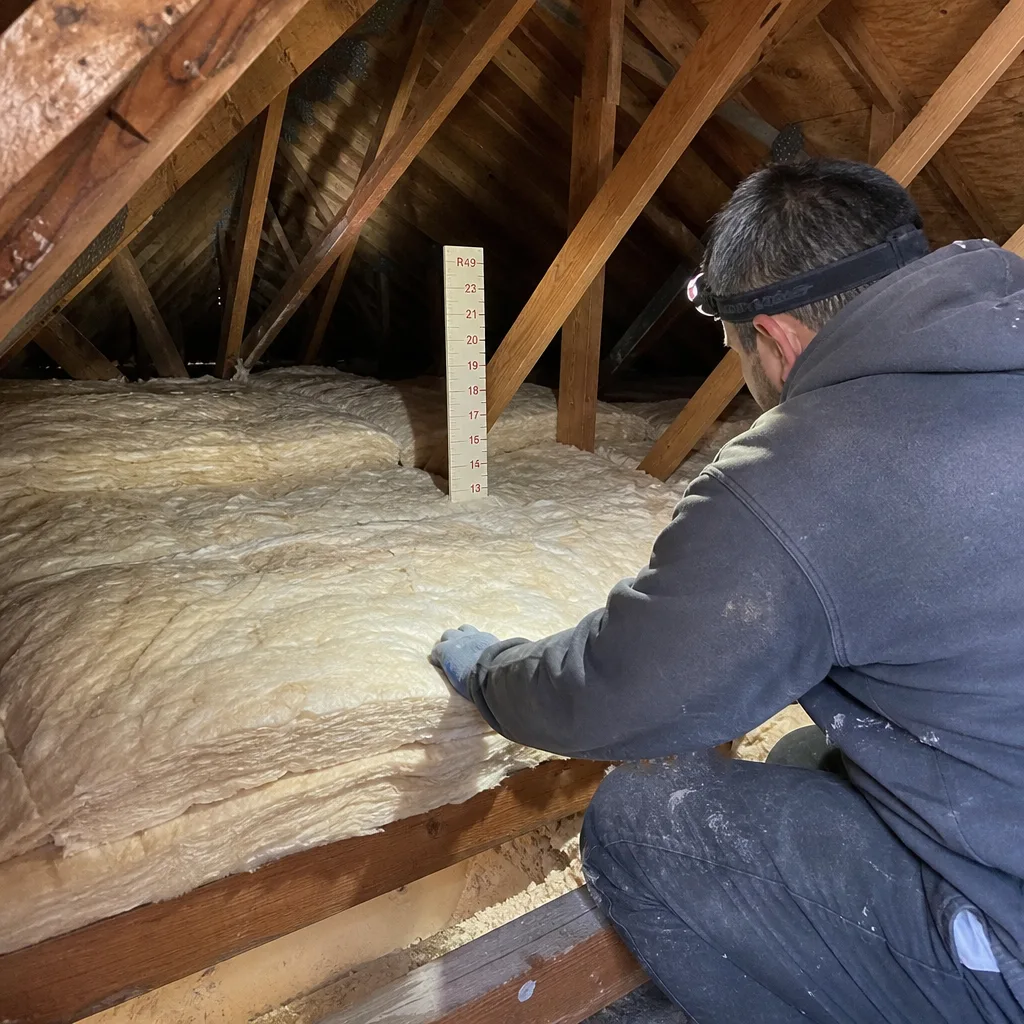
Here’s the thing about Icynene specifically. It’s a spray-applied polyurethane foam, and when it’s installed correctly, it does two jobs at once: it insulates and it air-seals. The air sealing is what separates it from fiberglass batts. But in Woodland Hills, where summer attic temperatures routinely push 140 degrees, older Icynene applications can develop hairline cracks along seams, around recessed lights, and where the foam meets framing members. Those cracks let conditioned air escape straight into the attic. Chase Whitaker likes to put it plainly: “If your attic is under-insulated, your AC is just paying rent to the outside air.”
Which Icynene Models This Applies To
Icynene has gone through several product lines over the years, and the compatibility question matters more than most contractors admit. The original Icynene Classic (now called Classic Max) is an open-cell, low-density foam. If your home was built or retrofitted between 2005 and 2015 in Woodland Hills, there’s a good chance this is what’s in your attic. Later formulations include ProSeal, ProSeal LE, and MD-R-200, which is a closed-cell option used when roof decking needs to be sealed from the top side.
Here’s the compatibility gotcha most owners don’t know: you cannot spot-seal a failed Icynene area with just any spray foam. Open-cell and closed-cell foams have different expansion rates and vapor profiles. If someone patches an open-cell Classic Max installation with a closed-cell product, you can trap moisture between the two layers, and in Woodland Hills’ dry-summer, damp-winter climate, that creates mold conditions inside the foam matrix. That’s why we match the product family, not just the color. We’re an independent service provider, not affiliated with Icynene, but we’ve installed and repaired enough of their product lines across the San Fernando Valley to know exactly what matches what.
When we arrive, the first thing we do is find the model. Open-cell Icynene has a soft, spongy texture and a cream-to-yellow color. Closed-cell is rigid, denser, and usually darker. If the original installer left a canister label or invoice in the attic, that solves it fast. If not, we cut a small core sample and match from there.
Signs Your Icynene Attic Air Sealing Is Failing
- Uneven room temperatures. The bedroom above the garage is 10 degrees warmer than the hallway. That gap usually means air is bypassing the foam at a specific penetration point, often where duct boots or electrical conduits pass through the ceiling plane.
- A sudden jump in your electric bill. Not a small drift upward, a real spike. When Icynene pulls away from framing at a seam, the conditioned air loss is concentrated and measurable. We’ve seen 20 to 30 percent bill increases in Warner Center homes where the foam has cracked along a ridge.
- You can smell attic air inside the house. Foam that has separated lets dusty, hot attic air migrate down into living space. It carries that attic smell: hot wood, old dust, maybe a faint whiff of whatever rodent activity is happening up there.
- Visible cracks in the foam at can light housings. In Woodland Hills, the foam around recessed lights is the most common failure point we see. The heat cycling from the light fixture plus 140-degree attic temps causes the foam to shrink slightly and crack over time.
- Draftiness near the ceiling in winter. When your heat runs, you feel a cold current along the ceiling plane. That’s air leakage through the foam’s edge, and it works against you in both seasons.
Replacement Cost & What’s Included
Attic air sealing replacement in Woodland Hills runs $1,400 to $3,800 installed, and the range is driven by three things: the square footage of the attic floor, the number of penetrations we need to re-seal, and whether the existing foam needs partial removal before we can apply a fresh Icynene-compatible layer. A typical 1,500-square-foot attic with 15 to 20 penetrations lands around $2,200 to $2,900.
| Scope | Typical Woodland Hills Price |
|---|---|
| Targeted re-seal, up to 10 penetrations | $1,400 – $1,900 |
| Full attic air sealing, 1,200 – 1,800 sq ft | $2,200 – $3,000 |
| Full air sealing + partial foam removal, large attic | $3,000 – $3,800 |
The labor and Icynene-compatible material are line-itemed on your written quote, so you know what you’re paying for before we start. Every job includes our 365-Day Done Right Promise in writing: if the air sealing fails within a year, we come back and fix it free. And if the repair fails after that, the second visit is on us. No charge, no argument.
DIY or Call Us?
Spray foam air sealing is not a good DIY project, and here’s the honest reason: the foam expands as it cures, and if you over-apply it around an electrical junction box or a recessed light housing, the expansion can put pressure on connections and wiring. That’s a fire hazard, not a cosmetic issue. The safe approach is what we do: identify the penetration, mask around it, apply in layers, and verify the seal after cure.
What you can do safely is document the problem. Take photos of any visible cracks or gaps in the foam. Note which rooms are warmest and when. Check your attic access hatch for a tight seal, because a loose hatch can cause the same symptoms as failed foam. Then call us at (559) 295-5362. We’ll come out, do a full attic assessment, and give you a written price before anything goes in.
FAQs
Properly installed Icynene-compatible air sealing should last 15 to 25 years in Woodland Hills, but the foam around recessed lights and other heat-cycling penetrations can crack within 8 to 12 years due to repeated expansion and contraction in attic heat. Call (559) 295-5362 and we’ll inspect exactly what’s going on in your attic.
Partial repair is absolutely possible if the failure is localized around seams and penetrations, which is what we see most often in Woodland Hills homes. Full replacement is only necessary when the foam has pulled away across large sections or has absorbed moisture. Estimates are free and the quote is in writing before we start.
Most Woodland Hills attic air sealing replacements take 4 to 7 hours, including setup, prep, application, and cleanup. Larger attics with partial foam removal can stretch to a full day. We’ll give you an exact arrival window before we come, with live tracking from the Relay app so you know when our uniformed technicians will be at your door.
Yes. Our trucks carry Icynene-compatible open-cell and closed-cell foam along with supporting materials from seven other brands: Owens Corning, Johns Manville, Knauf, Rockwool, CertainTeed, Demilec, and GreenFiber. We also keep Reflectix radiant barrier on hand when the job calls for it. For most Woodland Hills air sealing jobs, we have what we need on the first visit and can complete the work same-day.
Written by Chase Whitaker, Owner, Laurel Attic Insulation Woodland Hills at Laurel Attic Insulation Woodland Hills, serving Woodland Hills and nearby areas.