
GreenFiber Vapor Barrier Installation: The Woodland Hills Owner’s Guide
We stock and install GreenFiber-compatible vapor barrier material throughout Woodland Hills, with most installations running $450 – $1,150 depending on square footage and access. Same-day service is available in most cases, and our trucks carry GreenFiber-certified vapor barrier rolls so we’re not ordering parts after we show up. Here’s what usually brings a homeowner to this page: you pulled up your flooring, or climbed into your crawl space, and found what used to be a continuous sheet now looks like torn cellophane, or it’s pulling away from the foundation wall, or it’s developed mildew along the seams. That’s the exact moment to deal with it, because a vapor barrier that’s compromised isn’t doing its one job: keeping ground moisture out of your home.
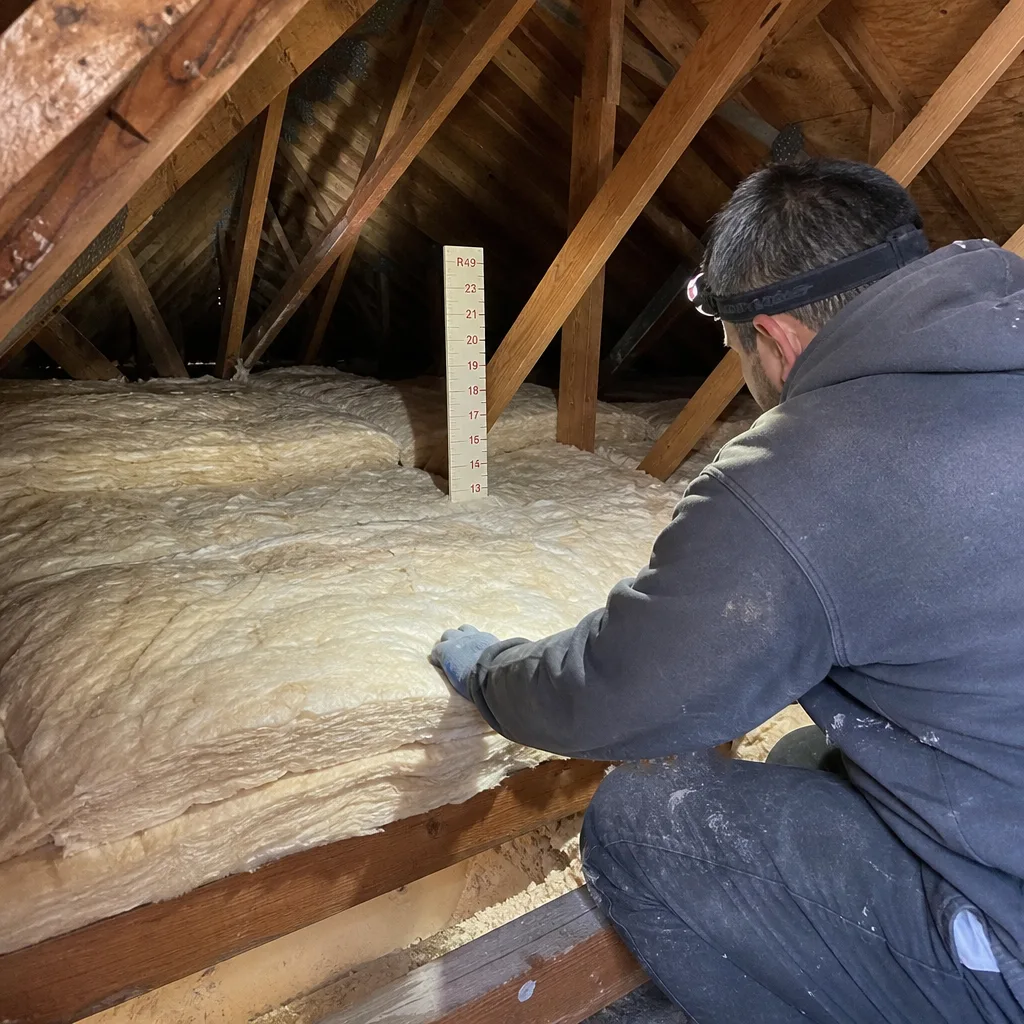
In Woodland Hills specifically, this matters more than most people realize. We’re not in the humid South, but our soil has a high clay content that holds water against foundation walls, and the hot, dry summers create exactly the conditions where moisture wicks upward and evaporates into your floor structure. A failed vapor barrier in this climate means elevated humidity in your crawl space, and elevated humidity finds its way up. Your wood floors start cupping, your air conditioner works harder because it’s trying to condition air that’s getting wetter by the day, and you may start smelling that distinctive musty, earthy odor that means mold spores are getting comfortable.
We’ve been installing GreenFiber-compatible vapor barriers across the San Fernando Valley long enough to know that no two crawl spaces in Woodland Hills are the same. Some homes north of Ventura Boulevard sit on relatively flat, well-draining lots, while others in the hillier neighborhoods south of the Boulevard deal with seasonal groundwater and poor drainage. That’s why we match the barrier material and installation method to the site, not the other way around. GreenFiber makes excellent cellulose insulation and vapor control products, and we pair their barrier material with proper sealing techniques that account for our local soil behavior.
If your attic is under-insulated, your AC is just paying rent to the outside air. The same principle applies below your floor. A vapor barrier that’s failing is renting out your home’s comfort to the ground underneath it.
Which GreenFiber Models This Applies To
GreenFiber vapor barrier products are designed to work as part of an overall insulation and moisture-management system, and the good news is that their barrier material is largely compatible across their product lines. If you have GreenFiber insulation installed in your crawl space, attic, or wall cavities, the vapor barrier we install is designed to work alongside that insulation, not against it. GreenFiber’s SANCTUARY and Insulmax product lines both rely on proper vapor control, and the barrier material we stock on our trucks is matched to those systems.
Here’s a compatibility gotcha that catches a lot of Woodland Hills homeowners off guard: GreenFiber cellulose insulation is treated with borates for fire resistance and pest control, and some off-brand vapor barriers degrade faster when in contact with borate-treated material. We’ve seen it happen in older homes near Warner Center where a previous contractor used an economy-grade polyethylene sheet that started breaking down within five years. We use barrier material specifically rated for use with borate-treated cellulose, which is what GreenFiber’s own installation guidelines call for. An aftermarket barrier can absolutely work, but only if it’s the right polymer specification. We carry the right one on the truck.
If you’re unsure what you have, look for a manufacturer label on any exposed insulation or on the old barrier itself. GreenFiber prints their name and product identifiers along the edge of their materials. If the old barrier is already pulled away from the foundation wall, take a flashlight and look for printing on the insulation batts or loose-fill above it. Our technicians can identify the right barrier match in about five minutes during an estimate visit. You don’t need to know the model number before you call us. We’ll figure it out.
Signs Your GreenFiber Vapor Barrier Installation Is Failing
- Mildew spots or dark staining along the barrier seams. When a vapor barrier develops small tears or the seams pull apart, moisture finds those gaps. The first visible sign is usually discoloration at the overlap joints, which tells us water has been condensing on the wrong side of the barrier for a while.
- A persistent musty smell in rooms directly above the crawl space. That smell is ground moisture evaporating into your floor joists and subfloor. In Woodland Hills, we notice this most often in homes built on slightly sloped lots where runoff moves toward the foundation during our brief but heavy winter rains.
- Cupping or warping wood floors on the first story. Hardwood responds to humidity changes by expanding unevenly. If your floors are cupping while your roof is fine, the source is usually below, not above. A vapor barrier that’s no longer continuous lets humidity spike directly under the flooring.
- Insulation falling away from the floor assembly. When moisture saturates GreenFiber insulation above a failed barrier, the material gets heavy and starts sagging or dropping. If you see insulation hanging down in your crawl space, the barrier failure likely happened first, and the insulation is the casualty.
- Increased cooling bills during Woodland Hills summers. Moisture in your floor system means your AC runs longer to maintain the same temperature. It’s an indirect signal, but we’ve diagnosed enough crawl space problems to know that a humidity spike underneath the house shows up on the utility bill months before you ever smell anything.
Replacement Cost & What’s Included
For a typical Woodland Hills home with a crawl space between 800 and 1,500 square feet, expect to pay $450 – $1,150 for complete GreenFiber-compatible vapor barrier installation. Smaller spaces under 800 square feet can run as low as $350, while large or complicated crawl spaces with lots of piers, ductwork, and plumbing to work around may push toward $1,500. Low-clearance access is the biggest price driver we see in Woodland Hills, especially in the older mid-century homes near the Warner Center corridor where crawl spaces are notoriously tight.
The price includes everything: the barrier material, seam tape, mechanical fasteners, professional installation, and full seam sealing around all piers, pipes, and support columns. We write the price down before any work starts, and you get it in your hand. No door-step adjustments, no “while we were in there” add-ons. The installation is covered by our 365-Day Done Right Promise. If the barrier fails due to our workmanship within a year, we come back and make it right at no charge. Free second visit if it fails. That’s in writing on every job.
We’re an independent service provider, not affiliated with GreenFiber. But we choose to stock and install their compatible barrier products because we’ve seen how they perform in our local climate, and we stand behind the work with our own written guarantee.
DIY or Call Us?
You can absolutely inspect your own crawl space without calling anyone. Grab a decent flashlight and look for obvious tears, pulled-away seams, or moisture staining. If the barrier is loose along the foundation wall, that’s a problem you can identify yourself in under ten minutes. But installing a vapor barrier correctly isn’t a weekend project for most people. The material comes in large rolls that are unwieldy in low-clearance spaces. Seams have to be overlapped properly and sealed with the right tape. The barrier needs to be mechanically fastened so it doesn’t shift. And working under a floor system with exposed nails, tight joist bays, and potentially compromised insulation is genuinely unpleasant if you don’t do it regularly.
More importantly, a botched vapor barrier installation can trap moisture against wooden structural members and make the problem worse than no barrier at all. We’ve seen homeowners spend a full weekend in a crawl space, only to create a moisture trap that required professional remediation six months later. This isn’t a safety hazard like a garage door spring, but it is a job where doing it 90% right means doing it 100% wrong. If you want it done once and done correctly, call us at (559) 295-5362. Estimates are free, and the price we quote is the price you pay.
FAQs
A properly installed GreenFiber-compatible vapor barrier should last 15 to 20 years in the Woodland Hills climate, though physical damage from rodents, plumbing work, or foundation settling can shorten that lifespan. Most barriers we replace are between 8 and 12 years old, and the failure usually traces back to an installation shortcut rather than material quality. Call (559) 295-5362 and we’ll help you figure out what’s actually going on.
A small tear in an otherwise sound barrier can sometimes be repaired with proper seam tape and a patch piece, but if the barrier has pulled away from the foundation wall in multiple places or has visible mildew, repair is usually money wasted. The material degrades once moisture wicking starts, and you’ll be chasing failures. We’ll tell you honestly which situation you have.
Most crawl space vapor barrier installations in Woodland Hills take 2 to 4 hours for a single-story home with standard access. Larger homes, very low clearance, or extensive re-sealing around many piers and pipes add time. We’ll give you an exact time expectation with your written estimate before you commit to anything.
Yes. Our trucks carry GreenFiber-compatible vapor barrier rolls in the most common widths, along with seam tape and mechanical fasteners. That means we can typically start the job the same day we inspect it, not schedule a second visit just to bring parts. Call (559) 295-5362 for availability in your part of Woodland Hills.
Written by Chase Whitaker, Owner, Laurel Attic Insulation Woodland Hills at Laurel Attic Insulation Woodland Hills, serving Woodland Hills and nearby areas.