
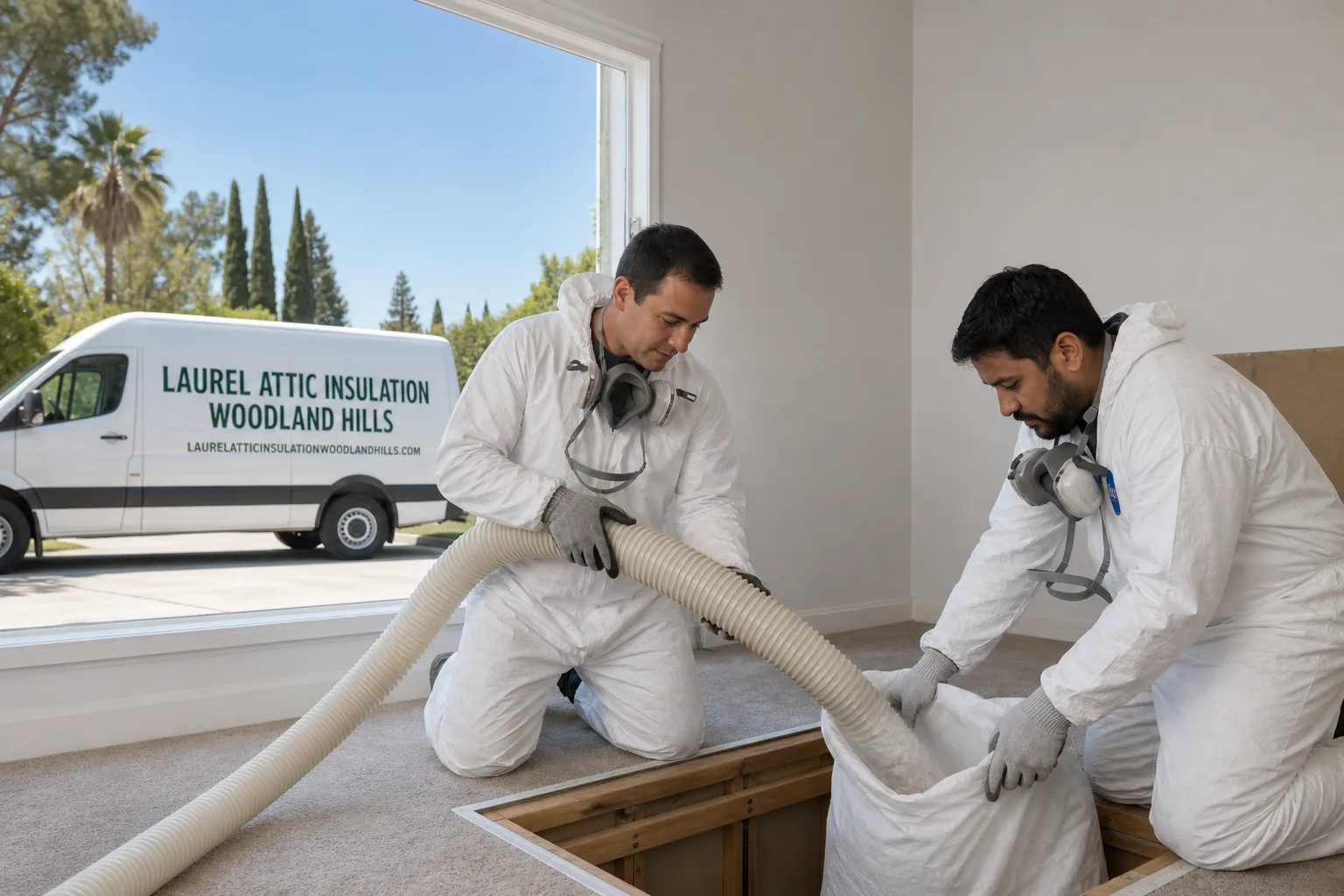
Fast, Reliable Insulation Removal Across Winnetka
Insulation removal in Winnetka runs $1.50 to $3.50 per square foot for typical attic jobs, so a 1,200-square-foot attic lands between $1,800 and $4,200, with most homeowners paying around $2,800. We’re in Winnetka weekly, and we know exactly what’s hiding in the attics of these 1950s and 60s ranch homes: settled rock wool that’s under 4 inches thick, rodent-damaged batts, and the kind of dust that’s been accumulating since the Johnson administration. If you’re dealing with moldy, compacted, or just plain exhausted insulation, call (559) 295-5362 for a written quote before any work starts.
Why Laurel Attic Insulation Woodland Hills Is Winnetka’s Preferred Insulation Removal Company
Chase Whitaker and the Laurel crew handle a lot of Insulation Removal work across the western Valley, and Winnetka keeps us busier than most. One reason is simple: this neighborhood has a massive inventory of post-war ranch stock with original attics that were barely insulated to begin with. We know what R-11 fiberglass looks like after 60 years of San Fernando Valley heat baking it into a thin, useless mat. We know how rock wool settles into dense, dusty layers that stop doing their job. And we know what it takes to get that mess out without coating your entire house in fine particulate.
Every job in Winnetka gets the Relay Standard treatment. That means a written price before we touch anything, live arrival tracking so you’re not guessing when the crew shows up, before-and-after photos sent directly to your phone, and a 365-Day Done Right Promise covering the workmanship for a full year. If it’s not right, Laurel makes it right. No charge, no argument. We also carry a written guarantee on every removal and replacement job, delivered with your digital invoice.
Moldy Insulation in Winnetka
Moldy Insulation removal in Winnetka is one of those jobs that seems optional until you walk into a bedroom and smell that stale, musty odor that won’t leave. In this part of the Valley, mold growth is almost always tied to a roof leak, a bathroom fan venting directly into the attic, or old single-pane windows sweating through the winter. The mold gets into fiberglass batts and blown-in material, and once it’s embedded, cleaning doesn’t fix it. The material comes out. Call (559) 295-5362 and we’ll get eyes on it fast.
When Winnetka Homeowners Need Moldy Insulation Removed
You need moldy insulation out if you can see dark staining on attic material, you smell a persistent musty odor in the house, or you know about a past roof leak over the bedroom wing. Ranchers along Saticoy Street and Corbin Avenue with low-slope roofs are especially prone to slow leaks that go unnoticed until the insulation starts holding moisture. Removing moldy insulation typically runs $2,000 to $4,500 for a standard ranch attic, depending on how much material is contaminated and how much containment we need to set up.
What Removal Actually Involves
Our techs set up full containment with HEPA filtration at the attic access point so the mold and dust don’t blow through your living space. We vacuum out the contaminated material with commercial-grade equipment, bag it, and dispose of it properly. Then we inspect the decking and framing for moisture damage before any new insulation goes in. Winnetka’s dry climate means the framing itself is usually fine once the wet material is gone and the leak source is sealed.
Insulation Replacement in Winnetka
Insulation Replacement in Winnetka isn’t just about pulling out the old stuff, it’s about deciding what goes back in so your AC can actually keep up come June. The western San Fernando Valley gets hammered with 90 to 100 degree days for months at a stretch, and if your attic is sitting at R-11 or less, that heat transfers straight down through your ceiling. The replacement job involves removing the settled or damaged material, air sealing the attic floor, and installing material matched to your home and your goals. Expect $2,500 to $5,500 for a typical Winnetka ranch, including the air sealing that makes real difference.
Why Settled Rock Wool Has to Go First
In a 1958 ranch on Oso Avenue, we pulled moldy Owens Corning batts from a 1962 home after a roof leak soaked the attic. Then we air-sealed and installed R-38 CertainTeed blown-in fiberglass before the first 100 degree heat wave hit. The homeowner texted our tech that her AC finally cycled off for the first time in years. That’s what replacement does when it’s done right: it changes how the house behaves, not just what’s sitting above the drywall.
Air Sealing Makes the Difference
Removing old insulation without sealing the attic bypasses is a half job. Those are the gaps around plumbing vents, recessed lights, and the top plates of interior walls where dusty conditioned air escapes into the attic and hot air gets pulled down into the house. Winnetka’s older homes have plenty of bypasses, and they’re a big reason why rooms over garages and additions never cool properly. We seal them before new insulation goes in. Otherwise you’re paying to heat and cool the attic, which does nobody any good.
Trusted Brands We Service in Winnetka
We don’t push one brand on every job. We stock and install Greenwood from GreenFiber, Owens Corning, Johns Manville, and Knauf, and we match the material to what the house actually needs. A Winnetka ranch with a low-slope roof and a tight attic might do better with dense-packed GreenFiber cellulose. A home with an attached garage and a bonus room above it might need Owens Corning or Johns Manville fiberglass with a higher R-value per inch. Laurel Attic Insulation Woodland Hills keeps enough material staged locally to handle most Winnetka removals and replacements without a second trip.
Common Insulation Removal Problems We See in Winnetka Homes
- Settled rock wool under 4 inches. Most 1950s and 60s attics in Winnetka started life with rock wool or loose fiberglass that has since settled into a dense, ineffective layer. It looks like insulation, but it’s doing almost nothing.
- Missing insulation above room additions and garages. Additions built without permits or to old code often skipped insulation entirely. We find it all the time above Winnetka garage conversions and bump-outs.
- Rodent-damaged batts. Valley rats and mice love fiberglass. They burrow through it, shred it, and leave urine and droppings that make the material a health hazard and a smell problem.
- Dust infiltration through unsealed gaps. Winnetka’s dry air means dust from the attic gets pulled down through every unsealed penetration. You’ll see it as gray streaks on fiberglass batts near recessed lights.
Pricing for Insulation Removal in Winnetka, CA
Insulation removal in Winnetka runs $1.50 to $3.50 per square foot. Attic-only removal in a 1,200-square-foot ranch typically lands between $1,800 and $4,200. Full removal plus R-38 replacement and air sealing usually totals $2,500 to $5,500. Job size, access difficulty, and whether we’re dealing with mold or rodent contamination are the big factors. Every quote is written, itemized, and delivered before any work starts. Call (559) 295-5362 and we’ll give you exact numbers for your attic, not a ballpark you have to decode.
We Also Serve Cities Near Winnetka
Laurel Attic Insulation Woodland Hills handles Insulation Removal in Winnetka and the surrounding west Valley communities, including Canoga Park, Reseda, Northridge, and Tarzana. If you’re a few blocks over the line, we’re still your crew. Response time to anywhere in this stretch is quick, and the quote is always free.
Serving Winnetka, CA - Our Local Coverage Area
We’re based in the Winnetka area and know this community well. Use the map below to see our service coverage - if you’re nearby, we can almost certainly help.
FAQs About Insulation Removal in Winnetka
If your home was built before 1980 and the attic has never been touched, there’s about a 90% chance you’re looking at original rock wool or early fiberglass that’s settled to under 4 inches. You can tell by looking: rock wool looks like gray-brown pebbles or cotton candy that’s been compressed into a dense mat. If you can see the ceiling joists from above, you’re under-insulated and the material needs to come out before anything goes back in. Call (559) 295-5362 and we’ll confirm it in a free attic inspection.
Your AC is fighting a losing battle against an uninsulated attic. In Winnetka’s first June heat wave, attic temperatures can hit 140°F, and with R-11 or less above the ceiling, that heat pours down into the living space. The AC works harder, cycles longer, and still can’t hold a comfortable temp. The fix is usually removing whatever thin, settled material is up there, sealing the bypasses, and installing R-38 or better. That’s when the AC finally cycles off.
Yes. We handle multi-family buildings along the major corridors in Winnetka, including older apartment stock from the same post-war era as the single-family homes. The process is the same: full containment, HEPA filtration, safe removal, and disposal. Pricing for apartment building attics depends on square footage and access, but we do these jobs regularly and can give you a written quote after a quick walkthrough. Call (559) 295-5362 to schedule one.
We match the replacement material to the house and the attic conditions. That means GreenFiber cellulose, Owens Corning fiberglass, Johns Manville, or Knauf depending on the application. A tight ranch attic with a low-slope roof might get dense-packed cellulose; a simpler attic might get R-38 blown-in fiberglass. We don’t bring whatever’s left on the truck. We bring what’s right for the job.
You don’t have to be home, but most Winnetka homeowners in the 28 to 45 range prefer to know what’s happening. That’s why you get a live arrival time, before-and-after photos sent to your phone, and a pay-from-the-link invoice when the job’s done. If you want to be on-site, we’ll walk you through what we found and what we’re doing. If you’d rather be at work, you’ll see the photos by mid-afternoon. Free quotes at (559) 295-5362 either way.
Written by Chase Whitaker, Owner at Laurel Attic Insulation Woodland Hills, serving Winnetka and the western San Fernando Valley.