
GreenFiber Crawl Space Encapsulation: The Woodland Hills Owner’s Guide
If you’ve got GreenFiber crawl space encapsulation that’s tearing, sagging, or pulling away from your foundation walls in Woodland Hills, we stock compatible replacement materials and can usually install them within 3 to 5 business days. Most GreenFiber-compatible crawl space encapsulation repairs in Woodland Hills run $1,800 to $4,500 depending on square footage, how much of the existing liner is salvageable, and whether your vapor barrier needs full replacement or spot repair. Here’s the honest picture: homeowners usually discover the failure two ways. Either they crawl under the house to check a musty smell and find the liner has torn at a seam, or they get a pest inspection report flagging moisture intrusion where the barrier has pulled loose from a pier or foundation wall. We’re an independent service provider, not affiliated with GreenFiber, but we install and repair their material lines every week across the San Fernando Valley.
Which GreenFiber Models This Applies To
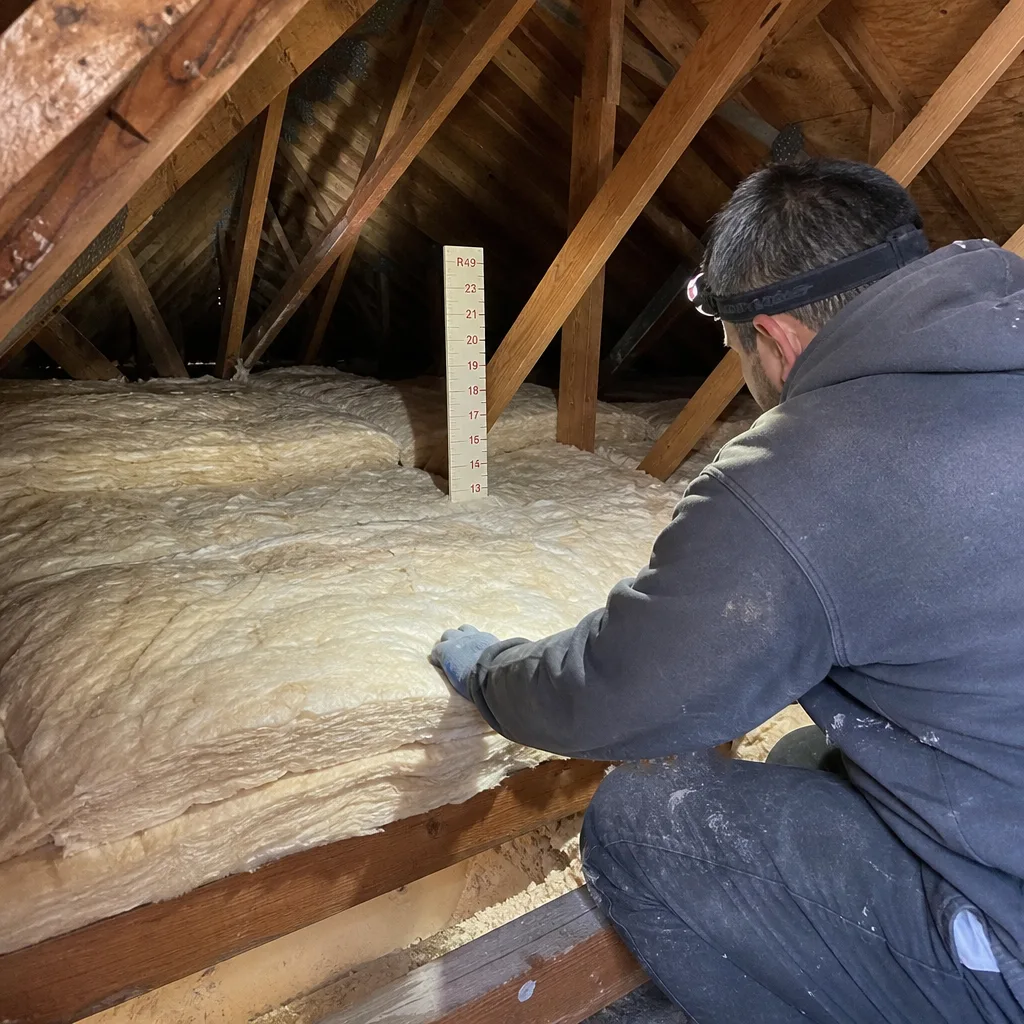
GreenFiber doesn’t manufacture a single “encapsulation kit” the way some brands do. Their crawl space lineup centers on their cellulose insulation products, which often get paired with a separate polyethylene vapor barrier during encapsulation work. The compatibility question is really about what’s already under your house. If your Woodland Hills home has GreenFiber cellulose blown into the floor joists or rim-joist bays, the encapsulation layer underneath it should be a 10-mil or 12-mil reinforced poly barrier. We see a lot of 6-mil plain poly from big-box stores that was never meant to last more than a few years in a Woodland Hills crawl space, where warm air and occasional damp soil create constant expansion and contraction at the seams.
The OEM-vs-aftermarket decision here is simpler than most parts pages make it sound. GreenFiber doesn’t sell a proprietary liner, so there’s no compatibility lock-in. What matters is the spec: reinforced 10-mil or thicker, with enough width to run up the foundation walls 6 to 12 inches and overlap seams by at least 12 inches. We stock both 10-mil and 12-mil reinforced poly on the truck, plus the butyl tape and mechanical fasteners rated for masonry attachment. The compatibility gotcha most owners hit: if your original installer used tape-only seams without mechanical fastening, the tape will fail first, usually within 3 to 5 years in this climate. Always ask whether your barrier is mechanically fastened to the foundation, not just taped at the seams.
Signs Your GreenFiber Crawl Space Encapsulation Is Failing
- Musty smell drifting up through the floor – This usually means the vapor barrier has torn somewhere and soil moisture is evaporating into the crawl space air. In Woodland Hills, where summer heat bakes the soil, that evaporation cycle speeds up dramatically once the barrier breaches.
- Higher indoor humidity in summer months – A failed barrier lets ground moisture load the air under your house. Your AC then works harder to pull that moisture out of the living space. If your indoor humidity sits above 60% in July, check the crawl space.
- Visible sagging or pooling water on the liner – This is a drainage problem, not a liner problem. Water pooling on top of the barrier means runoff is getting under the house. We see this constantly in the Warner Center corridor of Woodland Hills, where older homes sit on graded lots that shift over time.
- Liner pulled away from foundation walls or piers – The mechanical fasteners have failed or were never installed. Once the barrier drops away from the wall, moisture wicks up into the sill plate and rim joists, which is exactly where GreenFiber cellulose sits. Wet cellulose loses its R-value and can settle.
- Visible tears, especially near plumbing penetrations or ductwork – Every pipe and duct that passes through the barrier is a weak point. Unsealed penetrations around plumbing chases are the kind of thing Chase Whitaker says most contractors miss, and they quietly drive up energy bills for years.
Replacement Cost & What’s Included
For a typical Woodland Hills crawl space of 800 to 1,200 square feet, a full GreenFiber-compatible encapsulation replacement runs $2,800 to $4,500 installed. That includes removing the old barrier, laying new 12-mil reinforced poly across the floor and up the foundation walls, mechanically fastening to the masonry, sealing all seams with butyl tape plus fasteners, and sealing around every pipe, duct, and pier penetration. A partial repair where we’re replacing a torn section and re-taping seams usually lands between $1,800 and $2,600, but only makes sense if the existing liner is still in decent shape. If it’s a 6-mil big-box barrier that’s been down for 5-plus years, patching it is throwing money away.
Every job from Laurel Attic Insulation Woodland Hills comes with a written price before any work starts, no door-step surprises. The workmanship is covered by our 365-Day Done Right Promise, in writing. If the repair fails within that year, the second visit is free, no charge, no argument. You’ll get before-and-after photos of the crawl space, and the invoice comes as a digital link you can pay from your phone. The Relay Standard is the name for how we run jobs: book in a tap, get a live arrival time, see the photo proof, pay from the link. And yes, a live person answers the phone 24/7 at (559) 295-5362, not a voicemail queue.
DIY or Call Us?
Let’s be straight about what you can safely check yourself. You can inspect the perimeter of your crawl space entry for visible tears, check whether the liner is still attached to the foundation walls near the access point, and look for standing water or damp soil. You can also peek at whether the barrier runs up the walls at all, or stops at the floor edge. That’s useful information when you call us, and it helps us give you a tighter estimate over the phone.
What you shouldn’t do is attempt to re-lay or repair the barrier yourself. Crawl spaces in Woodland Hills often have exposed wiring, sharp foundation edges, and in some older homes, asbestos-wrapped ductwork or pest droppings that require proper PPE. Working under a house in a confined space with a staple gun and poly sheeting sounds simple until you’re lying on your back trying to fasten 12-mil material overhead without tearing it on a foundation crack. We’ve fixed plenty of DIY attempts that ended up worse than the original failure. If your liner has failed, call us at (559) 295-5362 and we’ll give you a straight answer about whether it’s a repair or a replacement job. Estimates are free.
FAQs
A properly installed 12-mil reinforced barrier with mechanical fastening and sealed penetrations typically lasts 15 to 20 years in Woodland Hills conditions. The 6-mil non-reinforced poly from hardware stores often fails within 3 to 5 years, especially around seams and fasteners where heat and moisture cause expansion and contraction. Call (559) 295-5362 and we’ll tell you honestly what you’re working with.
Yes, if the tear is isolated and the surrounding barrier is still supple and well-attached, a seam repair with butyl tape and mechanical fasteners can extend the life of the liner by several years. If the barrier is brittle, thin, or has multiple failed areas, replacement is the better call. We’ll show you photos either way so you can see exactly what we’re seeing under your house.
A full replacement in a typical Woodland Hills crawl space takes one day for the removal and installation, sometimes a second morning for sealing around complex plumbing and duct penetrations. The whole job is usually done within 2 working days. We’ll give you a written time commitment before we start.
Yes. We keep 10-mil and 12-mil reinforced poly, butyl tape, masonry fasteners, and the sealing materials for pipe and duct penetrations on our trucks serving Woodland Hills. We also work with other insulation brands including Owens Corning, Rockwool, Icynene, Demilec, CertainTeed, Johns Manville, Knauf, GreenFiber, and Reflectix for related products, so if your project needs a second material matched to the job, we can source it without a second supplier delay.
Written by Chase Whitaker, Owner, Laurel Attic Insulation Woodland Hills at Laurel Attic Insulation Woodland Hills, serving Woodland Hills and nearby areas.