
Rockwool Radiant Barrier Installation: The Woodland Hills Owner’s Guide
Rockwool radiant barrier installation in Woodland Hills typically runs $1,400 to $3,800 depending on attic square footage and whether we’re pairing it with new Rockwool batts or retrofitting around existing insulation. We stock the materials, and most jobs are scheduled within the same week, not the same month. Here’s the typical story we hear: your attic knocks out 120°F on an August afternoon, your AC runs nonstop from 2 p.m. to midnight, and the radiant barrier you had installed years ago has gone dull, torn, or was never installed with the air gap a radiant barrier actually needs. That air gap is the part most people don’t know about, and it’s the difference between a barrier that reflects heat and one that just becomes hot foil against the roof deck.
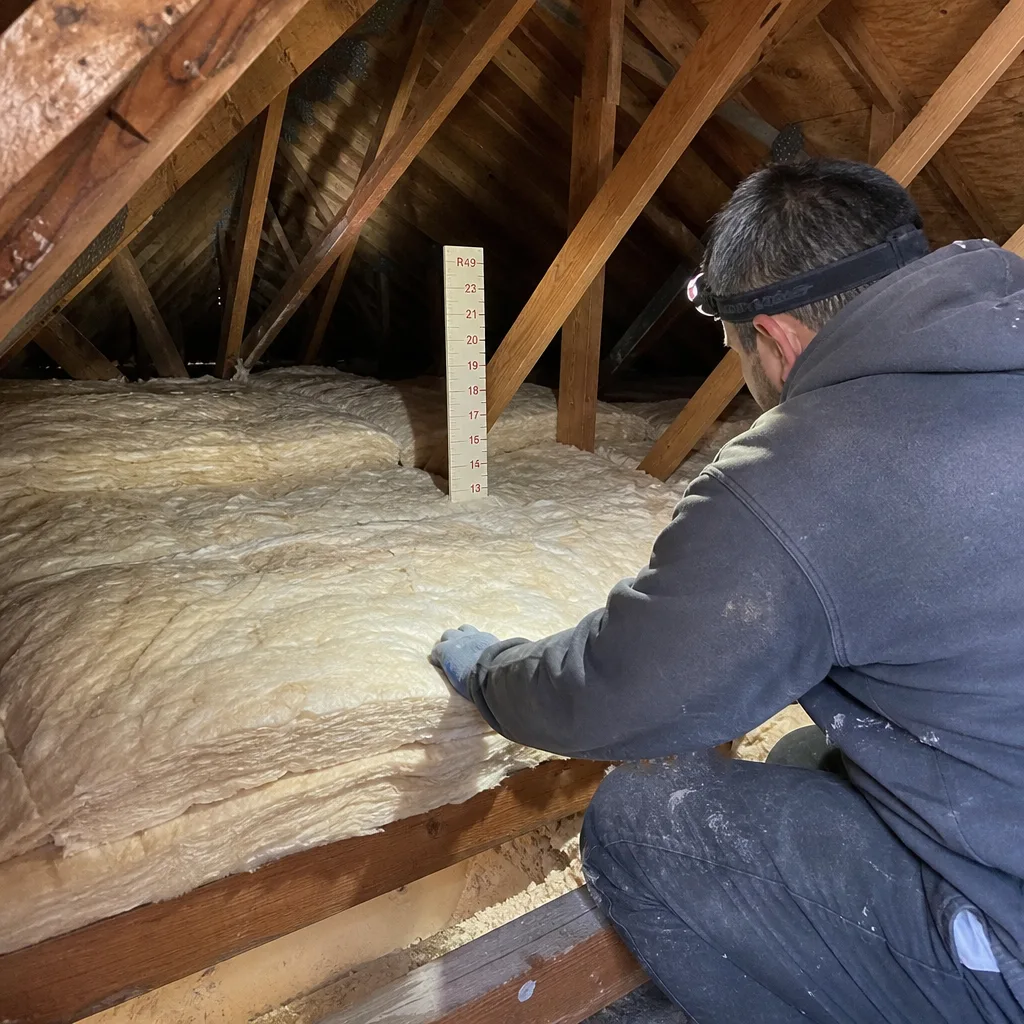
Rockwool’s rigid stone wool boards and their reflective facing work differently than the bubble-wrap style barriers you’ll see at big-box stores. If you’re holding a Rockwool product and wondering whether it can pair with a radiant barrier, the answer is yes, but the install method matters more than the brand stamped on the box. Chase Whitaker’s team has peeled back enough failed radiant barrier jobs across the Warner Center corridor to know exactly where the failure starts, and it’s rarely the Rockwool itself.
Which Rockwool Models This Applies To
Radiant barrier installation pairs with Rockwool’s residential batt and board lines: Comfortbatt, Safe’n’Sound, and Comfortboard 80 all work with a reflective radiant barrier, provided the barrier is stapled to the underside of your rafters, not laid flat against the insulation. That’s the compatibility gotcha most homeowners learn the hard way. Radiant barrier needs a minimum ¾-inch air space facing the roof deck to do its job. Lay foil directly on top of Rockwool batts and you’ve built a heat conductor, not a reflector. The foil just picks up heat from the sun-baked roof and transfers it into your insulation, which now has to work harder to keep that heat out of your hallway.
If you’re checking what you already have, look for a product label on the barrier itself. The major spec you’ll see is reflectivity and emissivity: a quality radiant barrier should reflect 95% to 97% of radiant heat and have an emissivity of 0.03 to 0.05. The lower the emissivity number, the slower the material releases the heat it does absorb. Generic foil from a hardware store often lands around 85% reflectivity, and on a Woodland Hills roof that bakes for 300-plus sunny days a year, that 10-point gap turns into real dollars on your LADWP bill. Laurel Attic Insulation is an independent service provider, which means we’ll match the barrier to the Rockwool product you already have, not steer you toward a specific line because we’re bound to it.
Signs Your Rockwool Radiant Barrier Installation Is Failing
- Your upstairs rooms are 8 to 12 degrees hotter than downstairs by 3 p.m. Radiant heat loads on the roof deck are strongest mid-afternoon. When the barrier’s reflective surface has accumulated dust, torn at the staple lines, or was never gapped properly, that heat dumps into the attic insulation and then into your second floor.
- The barrier sags or droops between rafters. Sagging closes the air gap and puts the foil in direct contact with the roof deck or the insulation. Either contact point kills reflectivity. We’d rather see a taut, staple-secured barrier than a “premium” material installed loose.
- Tears around roof penetrations. Plumbing vents, recessed light housings, and attic access hatches force cuts in the barrier. If those cuts were never sealed or re-stapled, you’ve got radiant heat streaming through exactly where your insulation is thinnest.
- Your AC runs constantly, but the house never really cools below 78°F. In Woodland Hills, where summer highs regularly reach the mid-90s and sometimes 100°F, a functioning radiant barrier should knock 10 to 20 degrees off your attic temperature. If your attic is 150°F, your insulation is fighting a losing battle regardless of its R-value.
- Dust and rat activity in the attic. Radiant barrier facing loses reflectivity when dust settles across its surface. Attic rodents also chew the foil edges and use it for nesting. We see this more in parts of Woodland Hills near the foothills, where wildlife traffic is higher.
Replacement Cost & What’s Included
For a typical 1,500-square-foot attic in Woodland Hills, expect to pay $1,400 to $2,800 for radiant barrier installation over existing insulation. If your Rockwool batts are underperforming or you’re adding material at the same time, the full job lands in the $2,200 to $3,800 range depending on attic accessibility and the R-value you’re targeting. Every quote includes the same named numbers before work begins, so you’ll see the material cost, the labor, and the total in writing. Nothing changes at the door.
Our installed barriers come with a 365-day workmanship promise covering the installation itself. If the barrier sags, tears at a seam, or the air gap closes within that year, we come back and fix it free. That’s the Relay Visibility Guarantee in action: a written price before anything starts, live tech tracking, and before-and-after photos of your attic so you can see exactly what went in and where.
DIY or Call Us?
Radiant barrier installation is not inherently dangerous the way gas lines or high-tension garage springs are, but it’s physically punishing work. Attics in Woodland Hills climb to 130°F or hotter during the summer, and you’ll be working overhead, on your back, in tight rafter bays. The real hazard is heat exhaustion and falling through the ceiling if you slip off a joist. We’ve pulled plenty of homeowners out of half-finished DIY jobs where they’d stapled 200 square feet, hit a low-pitch section, and realized the barrier wasn’t tight enough to maintain the air gap. What you can safely check yourself: look for sagging foil, closed air gaps, and tears around penetrations. If any of those show up, call us at (559) 295-5362. The estimate is free, and you’ll get a written number before we touch anything.
FAQs
A properly installed radiant barrier in Woodland Hills lasts 15 to 25 years before reflectivity meaningfully degrades. The two factors that shorten lifespan most are dust accumulation on the foil surface and physical damage from attic traffic or pests. The air gap, if properly maintained, doesn’t wear out. Call (559) 295-5362 if your barrier predates 2008, and we’ll give you an honest assessment of what’s left in it.
In most cases, yes. If the problem is localized tears or sagging in one section, we can re-staple and re-tension that area during a single visit. But if the facing has gone dull across the whole attic, replacing the barrier is usually cheaper than chasing 20 small patches. We’ll tell you which one you actually need, because it’s your money, not ours.
A standard Woodland Hills radiant barrier installation takes four to six hours for a 1,500-square-foot attic, assuming we’re working over existing insulation. If Rockwool batts need replacement or we’re sealing penetrations at the same time, allow a full day. You’ll get a live arrival time, not a four-hour window.
We stock radiant barrier products on our trucks, including materials compatible with Rockwool installations and Reflectix-branded alternatives. Don’t buy rolls online and hope they’re the right spec. We’ll bring what your attic actually needs, measure it, and show you the price in writing before the first staple goes in.
Written by Chase Whitaker, Owner, Laurel Attic Insulation Woodland Hills, serving Woodland Hills and nearby areas.